




NORTH SMITHFIELD – Officials with the North Smithfield School Department said the district expects to lose more than $200,000 in state aid in the coming fiscal year, but that the decrease won’t be as painful as it has in the past, since extra funding received last year was spent on non-reoccurring expenses.
The following year could be a problem, however, they warned.

“Obviously, things will change from now until then. We can remain positive for now,” said school Business Manager Alicia Melvin. “We’re going to present a balanced budget.”
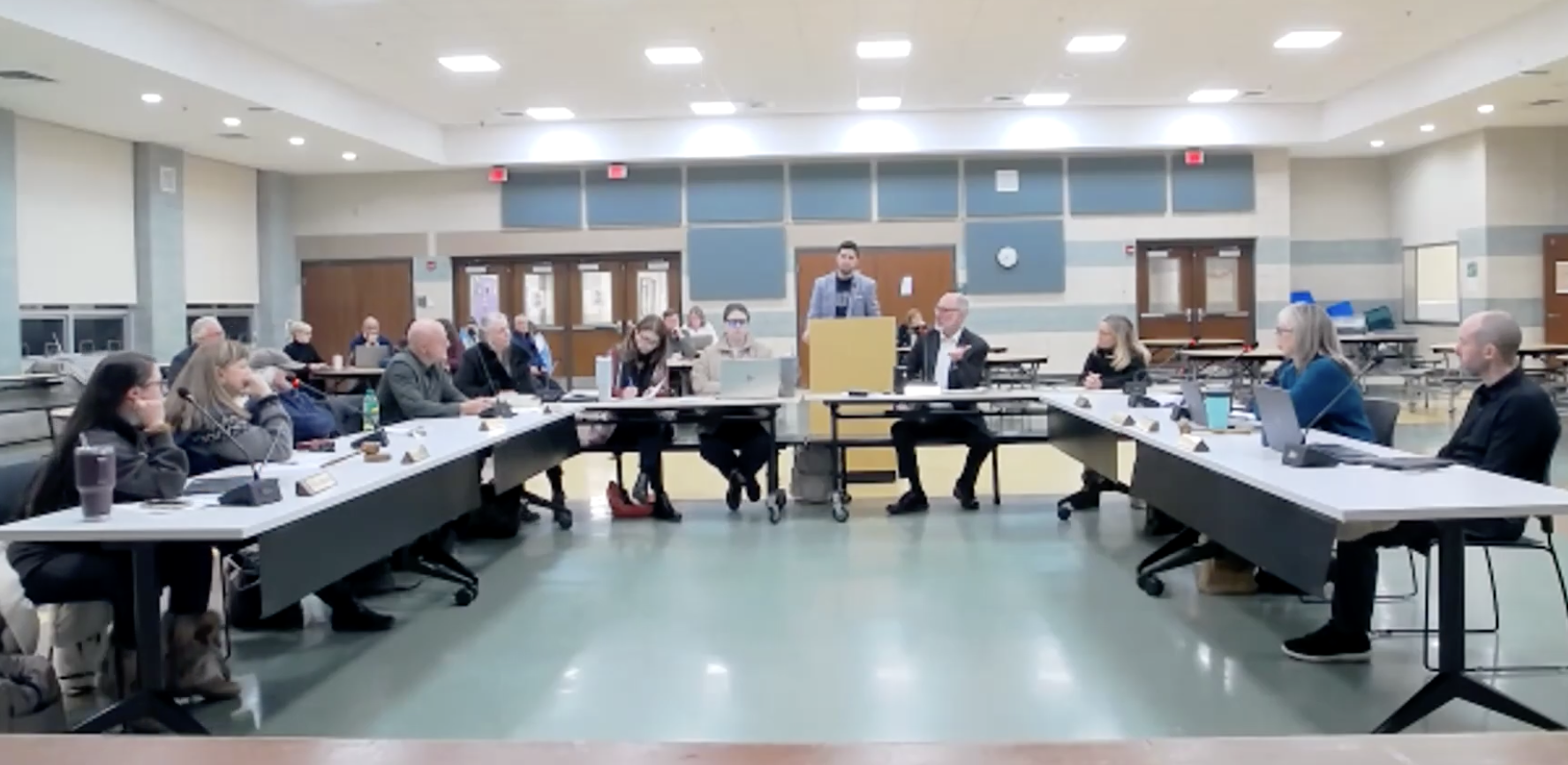
The conversation was held at a joint meeting between the Town Council and School Committee focused on early discussion of the budget, which also included stats on student enrollment and talk of the need for a greater focus on programming for students who are not necessarily college bound.
Supt. Michael St. Jean noted that the district has 1,648 students enrolled this year, down from a high of 1,718 in 2015. The figure, he noted, is up 11 from last year’s enrollment – making North Smithfield one of few districts in the state to see and increase.
“Most school districts are seeing their enrollment decrease,” St. Jean said.
Kindergarten enrollment, he said, saw a surprise increase, with 136 students as of October 1, up from the typical 80 or 90. The number of students with IEPs has increased, as has the number of multi-lingual students, with a total of 59.
“We’re most likely going to have to hire another MLL teacher to service the needs of as many students as we have coming in,” he said. “We anticipate next year there’s going to be even more.”
The district has nine new enrollees in the high school’s Career and Technical Education programs this year, for a total of 39 non-resident students, where the sending district must pay a tuition.
Home schooling numbers have also increased from 46 to 49 students – a figure which, prior to the Covid-19 pandemic, was typically in the 20s, he said.
“This isn’t a North Smithfield thing. This is a national thing,” St. Jean said.
The number includes 23 families who have never sent their children to North Smithfield schools, and many, also, that choose the option at the high school level.
“A good number of the high schoolers who are home schooling are students who are failing their classes or have issues with truancy,” said St. Jean.

The number of students attending an out-of-district program, he said, has dropped from 48 to 19.
“We try to keep as many students here as we can,” said St. Jean.
The superintendent noted that last year, the district did not request an increase in funding from the town because state aid went up significantly.
“Next year, it’s not going to be the same,” he said. “We’re looking at a decrease of at least $225,000 in state aid next year.”
Melvin said part of the reason for the expected decrease is that the median family income in the town has increased and is estimated at 26 percent above the statewide average.
“In theory, it means the community can better support the schools because they’re wealthier,” Melvin explained.
Melvin noted last year’s $1.5 million increae in state aid was largely used for one time purchases, such as new Chromebooks and curriculum, and a driveway that needed paving.

“We did not put it in staffing or anything like that, so it will be less hurtful this year to pull it back and present you a balanced budget,” Melvin said. “I think we’ll be fine this year. We do everything we can to spend it wisely.”
“It’s next year that I’m worried about,” she said, noting that district is currently expecting a gap of closer to $600,000. That budget cycle will also include contractual increases and an expected rise of around 5 percent in transportation costs.
The early joint budget meeting is held annually as required by state law, and Councilor John Beauregard noted he asks the same question every year. This year, however, it seemed to merit more discussion.
“I think you did a great job of preparing the kids for college and that’s great,” said Beauregard. “What are we doing for the kids who aren’t going to college?”
“I fully agree we need to do more for the non-college-bound,” responded St. Jean. “In the era of AI and what’s coming down the pike, the college degree, college education is not for everyone, nor is it going to have the jobs that we were accustomed to. We need to have more in the trades area.”
The problem, he said, is that the Rhode Island Department of Education’s graduation requirements are all college focused.

“It leaves so little room in the day to do anything that’s outside of the grad requirements,” St. Jean said. “We’ve been trying to work on this for a couple of years now.”
Asst. Supt. & Curriculum Director Clare Arnold pointed to senior projects at the high school, which require work with an outside mentor, pathways programs and other efforts.
“We do have pockets,” she said of learning for the non-college bound.
“What we’re trying to explore is what kind of partnerships can we form with outside agencies and businesses,” said high school Principal Dan Geraghty.
“The problem really comes from RIDE,” said School Committee Chairperson Terri Bartomioli. “They want everyone to go to college. They’re not leaving any breathing room for the students to take many electives because they have so many core classes they’re required to take.”
“I think you guys provide a great education,” said Beauregard. “I was just looking at another segment of the population.”
School Committee member Christopher Simpkins questioned if the district could advocate for a change from RIDE.
“We would not be alone,” said St. Jean. “This is crushing all of us. I firmly believe RIDE needs to change these regulations. It’s breaking towns. It’s breaking schools.”



This is a very disturbing article. The town has no one who has any idea about fiance or budgeting. If the budget was done correctly and revenue is short then expenses would have to cut but the inexperienced budgeting person said the school department will be OK. The reason the budget is ok is because the school department always budgets 3% more than required and always has a surplus at year end. Check the last 5 years always a surplus so they can spend on anything they want with zero approval. Now what will happen when all of the Trump cuts hit the state and funding is cut. Maybe the Trumper and chief waster of taxpayers money can offer a comment or solution.