




GLOCESTER – The Town Council has passed a resolution supporting an effort to create a permanent memorial honoring a politician, blacksmith and judge who resided in Glocester in the late 1700s at the urging of his living ancestors.
The Daniel Owen Monument is expected to be placed on Town Hall property sometime this year, featuring a native stone and bronze plaque recognizing his work, to be donated by the family.

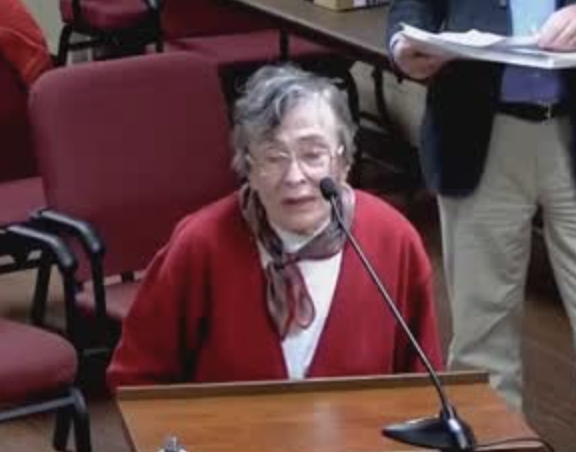
The initiative was first brought before the council in April, with town historian Edna Kent introducing Lawrence Owen, an ancestor of the 18th century statesman. The pair described Owen’s background including work as a blacksmith and early coinage production.
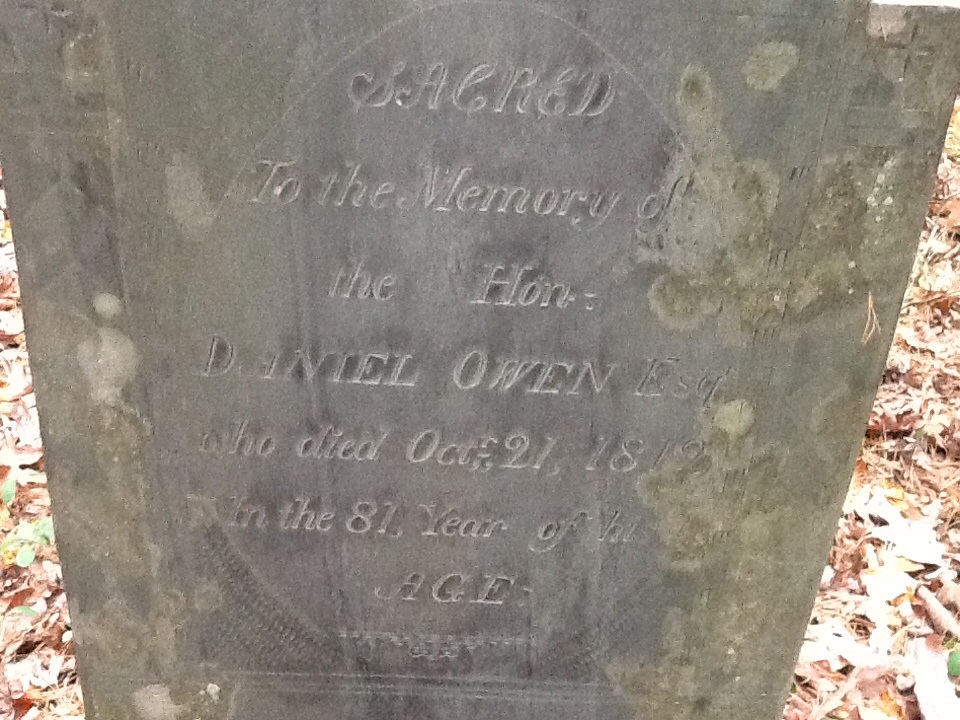
Owen settled in the town of Glocester in the 1750s, and iron ore was found on his farm. He would become an iron tradesman, forging and manufacturing farm implements that were exported to England. Owen is credited with playing an instrumental role in the coining of the first American cent, and held the exclusive privilege of creating coinage for what was then the colony of Rhode Island for 12 years.

A leading Antifederalist, Owen also served as president of the state convention that adopted the constitution of the United States. Rhode Island was the last colony to adopt the constitution and in a letter to George Washington in 1790, preserved in the National Archives, Owen describes the progress.
“The lower House of the general assembly of this State at their session the former part of this month past a resolution requesting His Excellency the Governor in case the Constitution should be adopted by the Convention to call the assembly together by warrant, as soon after the adoption as might be, for the special purpose of electing the Senators, and taking measures for a representation of this State in Congress—I can therefore assure Your Excellency that in the course of a few days, not to exceed sixteen, the Legislature will be assembled, either by special warrant, or pursuant to their adjournment on the second monday of June, when I have not the least doubt, the Senators will be immediately appointed, and the State represented in Congress, agreeable to the constitution, as soon as the elections can be accomplished.“
Owen reportedly did not send the Articles of Ratification to Washington right away, instead waiting until another state election could be held, allowing more members of his Country Party to be voted into office. This ensured those in the party would serve as the inaugural members of the Senate and House of Representatives.
Owen served as lieutenant governor of the state from 1786 to 1790, and was an associate justice of the Rhode Island Supreme Court from 1790 to 1791. He also served as chief justice for Rhode Island 1791 to 1795. He died in Glocester in 1812.
Historian Kent has assisted the Owen family in assembling the historical record, and championed the effort to erect the new monument in conjunction with the town’s celebration of the America’s 250th anniversary.
According to details discussed with the council, Public Works Director Gary Treml will oversee choosing the stone, with DPW staff to set it in place near the existing parking area of the Town Hall building at 1145 Putnam Pike.
Proponents requested that councilors take up a formal motion supporting the project in December, which was passed unanimously.




Ah, but Mr. Laplante, Daniel Owen’s story, behind the statue, and that of all 13 of the states between the Revolution and the Constitution, is exactly about finances. Finances were so bad that mob action took place in several states, and particularly in the Town of Glocester, (which of course included the part that later became Burrillville.) Thousands of families in rural Rhode Island and bordering Massachusetts were effectively bankrupt. Civil disobedience was widespread and acts of violence took place. It was cool headed and respected local leaders like Owen that lead the public back from the brink of anarchy.
As Mark Twain was alleged to have said, “History doesn’t repeat itself; but sometimes it rhymes.”
The thanks due to Edna Kent and her associates for highlighting the political accomplishments of Daniel Owen is well deserved. Amid all the patriotic folderol we will enjoy this year, it is instructive for our own times to learn the story of effective leaders like Owen, who had the judgement, integrity, and skills of leadership to shepherd his public through the very hard times that ensued between the date the Revolution ended, and the date the Constitution became law. The country could have torn itself apart if not for the good judgement of popular leaders like him.
I have a better idea. Why don’t we get out of town finances in order. Statues in platitudes don’t pay the bills.