




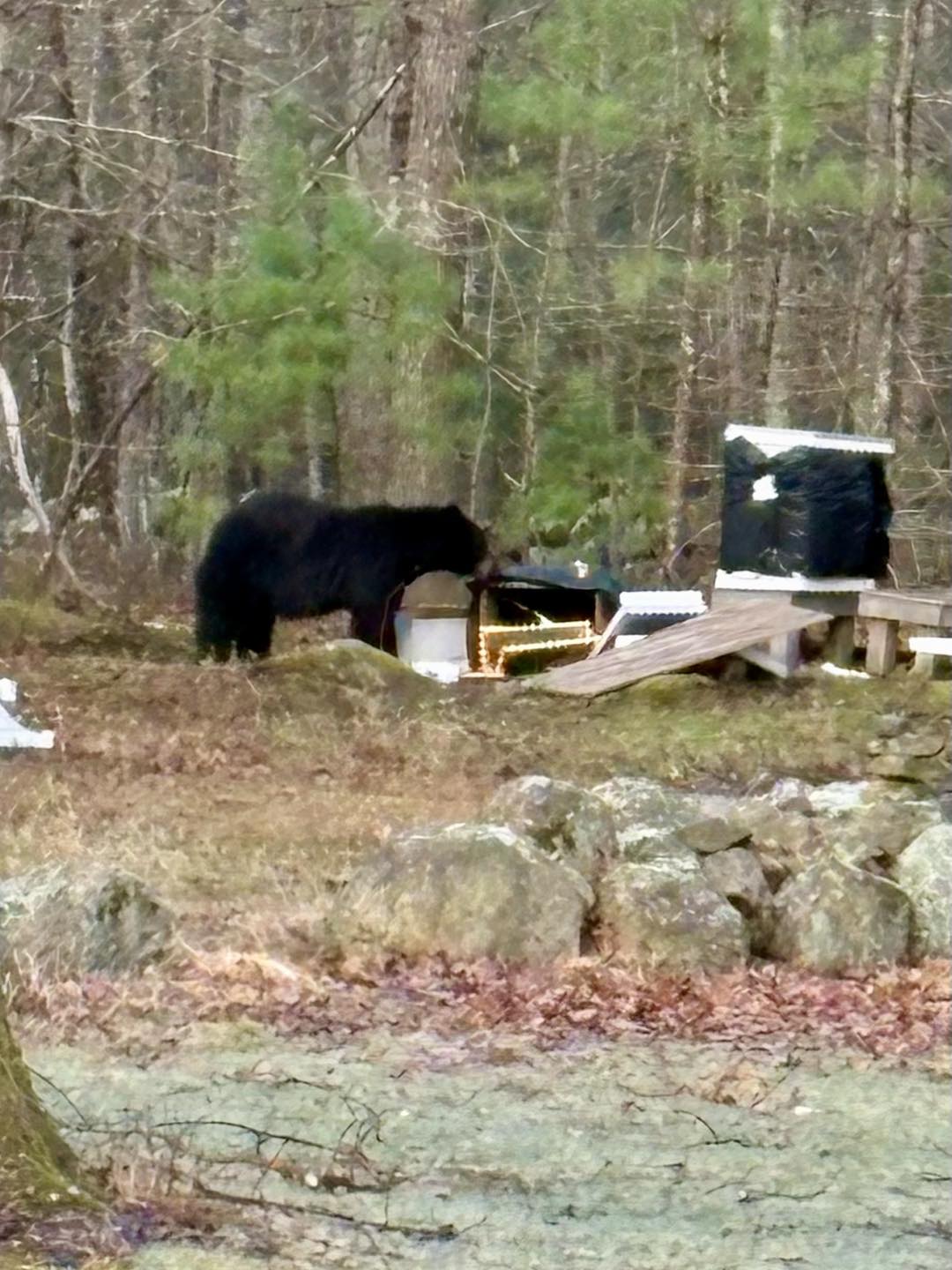
BURRILLVILLE – A black bear rampaged through the yard of a Burrillville home on Tuesday causing damage and even taking a caged pet, prompting Burrillville Animal Control to issue a safety reminder to residents.
Animal Control Officer Kerry Courtemanche-Brissette said a bear in the 700 block area of Cherry Farm Road took down a bird feeder, destroyed bee hives and even took a caged rabbit.

“Black bears are out and about,” noted the ACO. “Please remove your birds feeders, secure trash and feed, and clean grills. It is also a good idea to put electric fencing around chicken coops and bee hives.”
Emerging with the warmer weather, black bears have seen a resurgence in the state in recent years, due largely to habitat restoration and wildlife management policies in Massachusetts and Connecticut. Healthy populations in the neighboring states has led to increased sightings of transient bears in Rhode Island.
“Bears are a natural part of the southern New England landscape, and their presence should not be cause for fear in the community,” notes the Rhode Island Department of Environmental Management in a guide on the animals. “Encouraging respect for these large mammals and removing bear attractants will go a long way in preparing Rhode Islanders to be ‘bear aware.'”
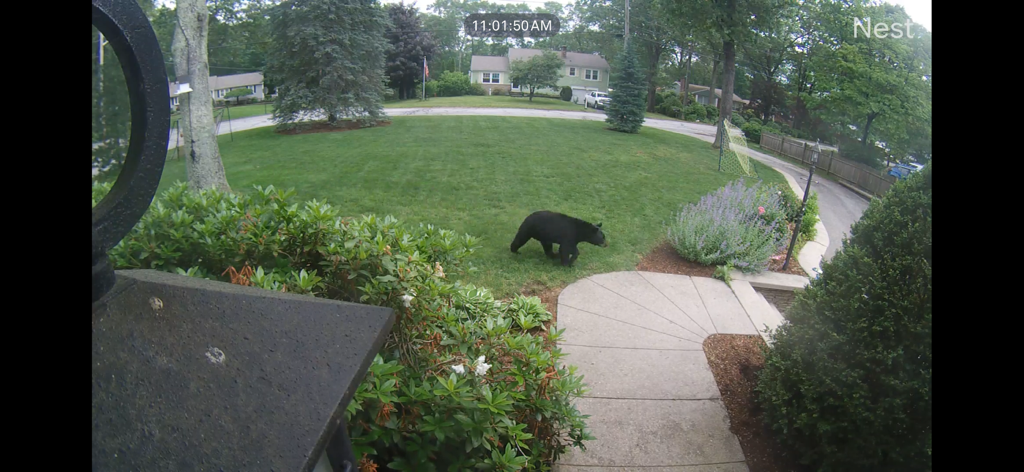
Black bears are generally unaggressive, but can be destructive when scavenging from trash cans, bird feeders, vegetable gardens, farms, livestock feed, and commercial/backyard beehives RIDEM notes. And the animals can easily become dependent on readily available backyard food sources and become a nuisance.
To prevent bear problems, residents are advised to only feed birds from November 1 to March 31, when bears are not active. Trash should be secured in containers and only put out on the morning of collection, and composters are advised to keep meat scraps and fatty items out of their piles. Pet food dishes should be brought inside and livestock should be secured in pens or buildings away from forest edges. Electric fencing should be used to protect chickens, rabbit and beehives.
Read the full guide on black bears from RIDEM here.
To report a sighting, contact RIDEM Division of Fish & Wildlife at (401) 789-0281.